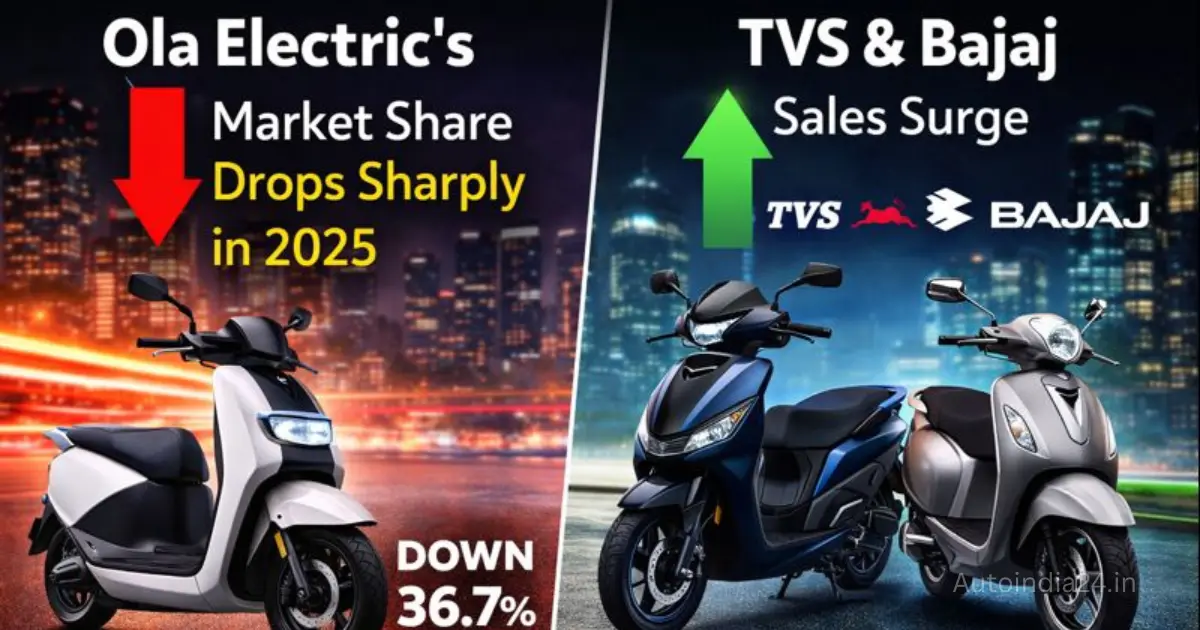
The Indian electric two-wheeler (e2w) market witnessed a sharp and consequential shift in 2025. After dominating the segment for years, Ola Electric Market Share fall by more than half, from 36.7 percent in 2024 to 16.1 percent in 2025. This decline came despite overall growth in electric two-wheeler adoption, underlining that the slowdown was brand-specific rather than market-wide.
At the same time, legacy manufacturers strengthened their positions, reshaping the competitive balance of India’s fast-evolving EV ecosystem.
Also Read: Royal Enfield Flying Flea S6 Design Patent Filed in India Ahead of 2026 Launch
A Steep Decline Amid a Growing Market
According to registration data available on the Vahan portal, Ola Electric sold around 1.97 lakh electric two-wheelers in 2025, down from over 4 lakh units in 2024. This drop occurred even as the broader e2w segment picked up momentum, indicating that Ola struggled to convert rising demand into sales.
Multiple factors contributed to this decline. Industry feedback and customer reports point to operational bottlenecks, delivery delays, and concerns around service turnaround times. As competition intensified, these weaknesses became more visible, particularly when compared to rivals with established dealer and service networks.
Legacy Brands Regain Ground
While Ola’s volumes softened, established manufacturers capitalised on their strengths. TVS Motor Company emerged as the new market leader in 2025, selling nearly 2.95 lakh electric two-wheelers and securing a 24.2 percent market share. Close behind was Bajaj Auto, which captured 21.9 percent of the market.
These gains reflect a broader trend: traditional OEMs leveraging their extensive dealer networks, proven after-sales infrastructure, and manufacturing scale to reassure buyers transitioning from internal combustion to electric mobility. For many customers, especially outside major urban centres, service accessibility and brand familiarity remain decisive factors.
Hero MotoCorp also made notable progress, increasing its market share from 3.9 percent in 2024 to 8.8 percent in 2025. This growth highlights how even late movers can scale rapidly when backed by strong distribution and customer trust.
Rising Competition from EV-First Players
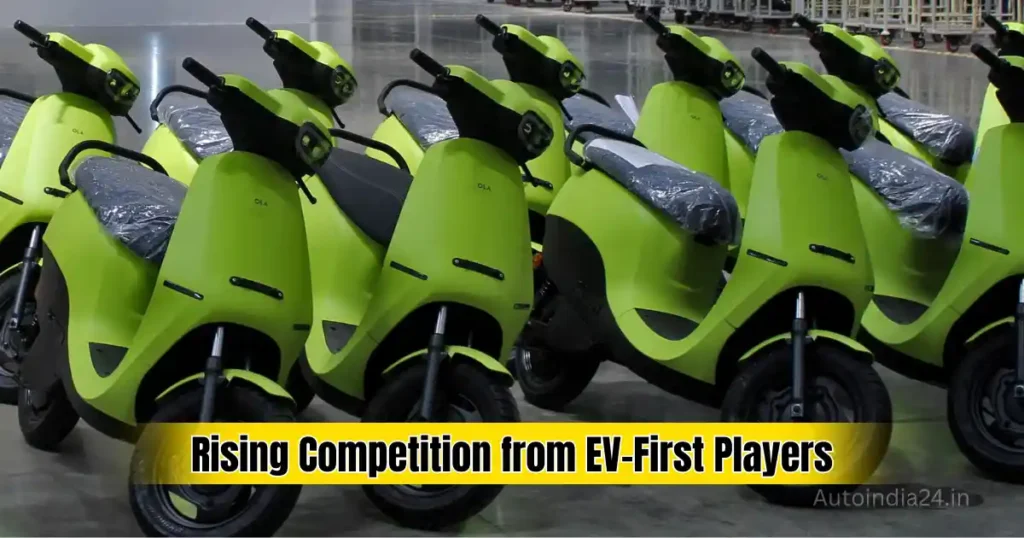
The pressure on Ola did not come only from legacy manufacturers. Ather Energy, another EV-focused brand, recorded a strong year, growing its market share from 11.3 percent in 2024 to 16.2 percent in 2025—marginally overtaking Ola.
Ather’s steady expansion underscores the importance of consistent product quality, software stability, and service reliability in the electric space. As buyers become more informed, brand loyalty increasingly depends on ownership experience rather than early-mover advantage.
Structural Challenges in 2025
Beyond brand-level dynamics, 2025 was a difficult year for the electric two-wheeler industry as a whole. Supply chain disruptions—particularly the temporary unavailability of heavy rare earth metals due to geopolitical tensions involving China—added cost pressure and uncertainty. These constraints affected production planning and component sourcing across manufacturers.
For Ola Electric, which is in the process of integrating self-developed battery cells into its products, these disruptions compounded existing challenges. While vertical integration may strengthen long-term competitiveness, the transition phase can strain execution and timelines.
What This Means for Buyers
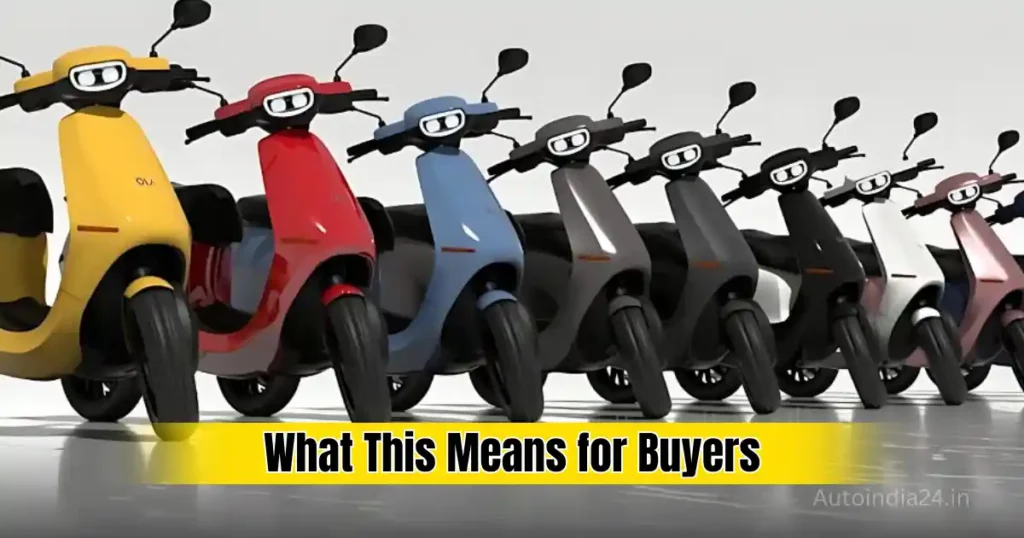
For Indian consumers, the market realignment has largely been positive. Increased competition has led to a wider choice of electric scooters and motorcycles, backed by stronger service coverage and improved reliability. Buyers now have credible options across price points, whether they prefer EV-focused startups or traditional manufacturers entering the electric space.
The shift also signals a maturing market, where operational excellence and customer support are becoming as important as innovation and aggressive pricing.
The Road Ahead- Ola Electric Market Share
Industry experts believe competition will only intensify. As Avanteum Advisors LLP’s managing partner VG Ramakrishnan has noted, electric two-wheelers are no longer limited to scooters; motorcycles and new formats will further broaden the segment. Legacy OEMs, with their scale and reach, are expected to push harder, while EV-native brands will need to sharpen execution to stay relevant.
Ola Electric Market Share decline in 2025 does not mark the end of its influence, but it does serve as a reminder that leadership in India’s EV market is no longer guaranteed by early entry alone. As the sector matures, consistent delivery, service quality, and supply chain resilience will determine who leads the next phase of electric mobility.
Disclaimer: Market share figures are based on publicly available registration data and industry reports at the time of publication. Figures may vary slightly as datasets are updated.
Also Read: 2026 Kawasaki Vulcan S Launched in India With E20 Engine Update

Raj Prajapati is a senior automobile journalist at AutoIndia24, reporting on car, bike, EV, and auto industry developments in India.