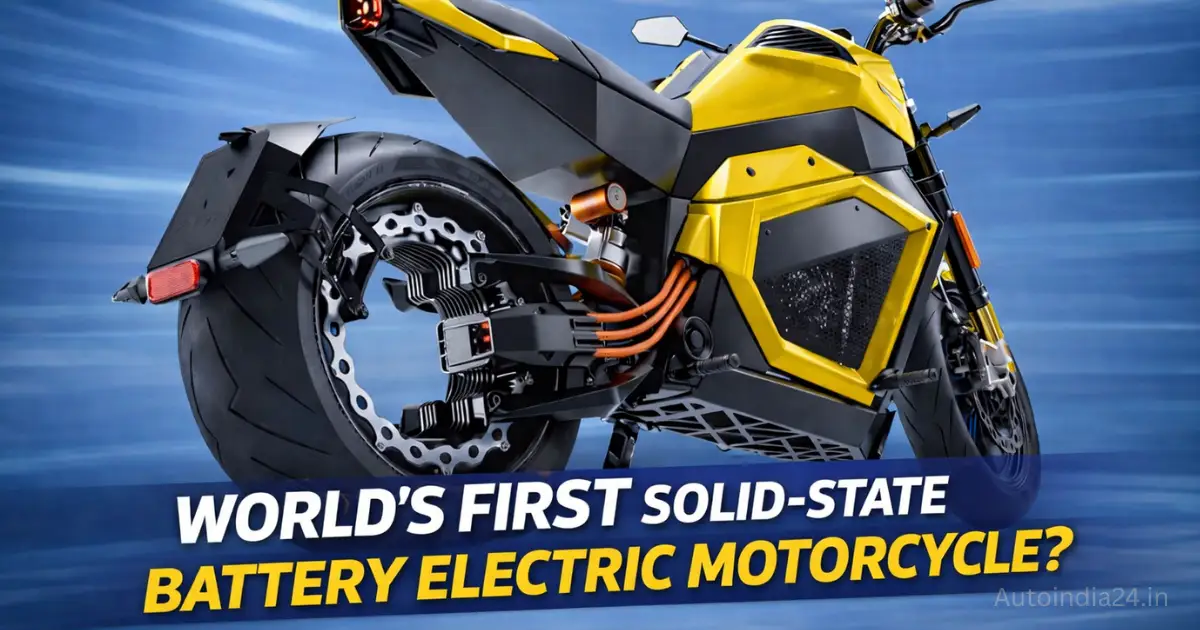
Verge TS Pro Explained: Electric motorcycles have long promised silent performance and low running costs, but concerns around range, charging time and safety have kept them from becoming mainstream. A new motorcycle from Finland may signal a shift. The Verge TS Pro has become the world’s first production electric bike to use a solid-state battery, a technology many believe is the next big leap in electric mobility.
Built by Verge Motorcycles, the TS Pro is not just a tech demo. It combines a new battery design with extreme performance figures and ultra-fast charging, raising important questions about where electric two-wheelers could be headed—including in markets like India.
Also Read: KTM RC 160 Launched in India at ₹1.85 Lakh, Direct Rival to Yamaha R15
What Is a Solid-State Battery and Why It Matters
Most electric two-wheelers today rely on lithium-ion or LFP batteries. These use liquid or gel-based electrolytes to move energy between cells. Solid-state batteries replace this liquid component with a solid electrolyte.
The practical advantage is safety. Liquid electrolytes can overheat or catch fire in extreme situations. A solid-state design significantly lowers this risk, making the battery more stable in crashes or high-temperature conditions. This is one of the main reasons carmakers and battery suppliers worldwide have been investing heavily in this technology for years.
Until now, solid-state batteries have largely remained in laboratories or prototype vehicles. The TS Pro marks the first time this technology has reached a production motorcycle that customers can actually buy.
Ultra-Fast Charging: A Key Breakthrough
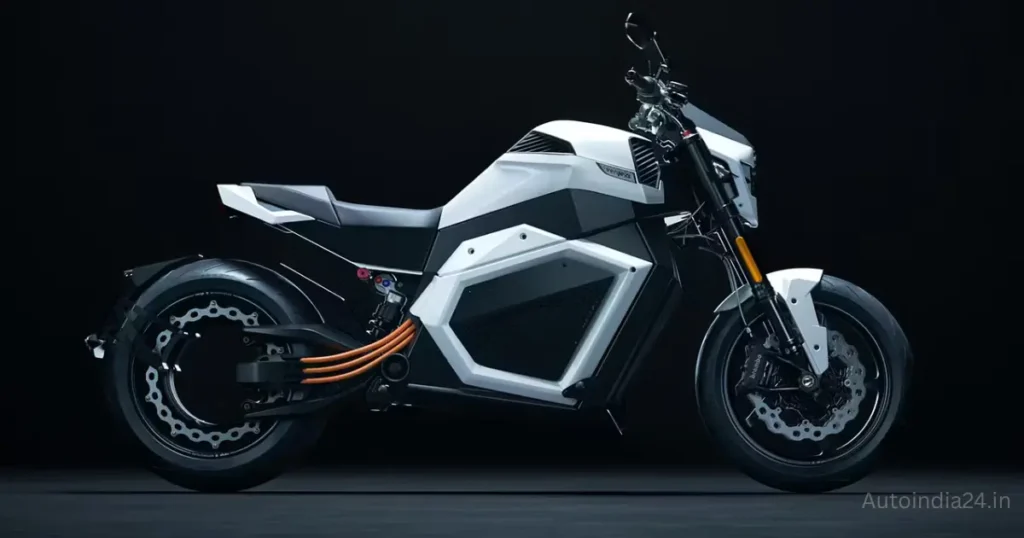
Another headline feature of the Verge TS Pro is its support for CCS2 fast charging at up to 200kW. According to Verge, this allows the battery to charge from zero to 80 percent in just 10 minutes, provided a compatible high-output charger is available.
For electric motorcycles, charging time has been a major drawback. Even premium electric bikes often require hours to fully recharge. A 10-minute top-up dramatically changes the ownership experience, making long-distance riding far more practical.
In the Indian context, such charging speeds are not yet realistic due to limited high-capacity public chargers. However, the technology shows what may be possible in the future as charging infrastructure improves, especially on highways.
Range Options and Real-World Usability
The TS Pro is offered with two battery pack choices: a 20.2kWh unit with a claimed range of up to 350km, and a larger 33.3kWh pack promising up to 600km. Even if real-world figures fall short of these claims, the numbers are far beyond what most electric motorcycles currently offer.
For Indian riders, where daily commuting distances are shorter, such ranges may seem excessive. However, longer range reduces “range anxiety” and allows electric bikes to compete with petrol motorcycles for touring and intercity use.
Performance That Matches Petrol Superbikes
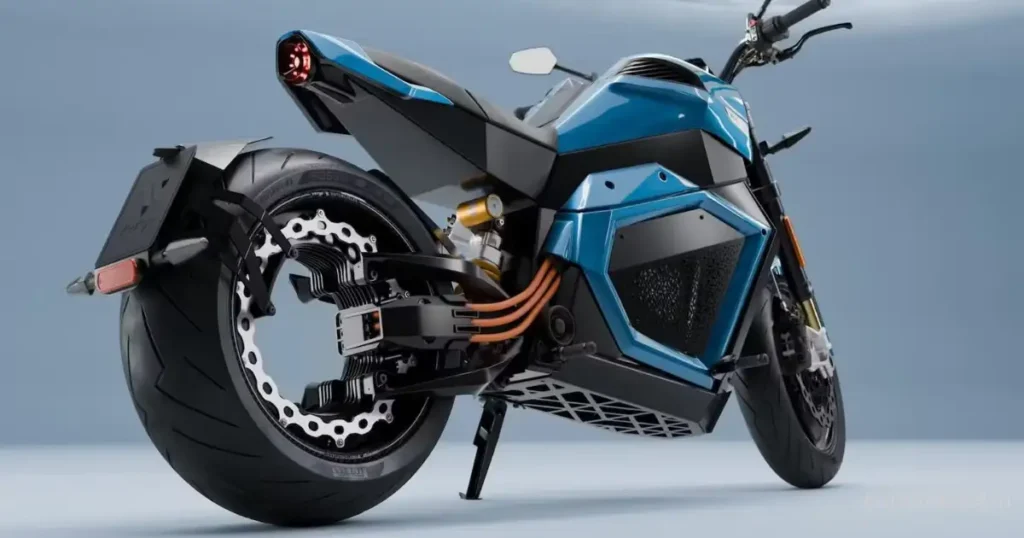
Electric powertrains are known for instant torque, and the TS Pro takes this to an extreme. Its hubless rear motor—where the wheel spins without a traditional central hub—produces 102kW (around 138hp) and a staggering 1,000Nm of torque.
Verge claims a 0–100kph time of 3.5 seconds, placing it squarely in superbike territory. This level of performance puts the TS Pro alongside high-end petrol machines like the Ducati Streetfighter V4, which it is also priced against in international markets.
The downside is weight. At 235kg, the TS Pro is heavier than many petrol naked bikes, which could affect low-speed handling.
Electronics, Hardware and Everyday Features
To manage its power output, the TS Pro comes with traction control, dual-channel ABS, adjustable regenerative braking and four riding modes—Range, Zen, Beast and Custom. These allow riders to prioritise efficiency, comfort or performance.
The bike also offers features aimed at real-world usability, such as cruise control, heated grips and adjustable footpeg positions. High-end suspension from Ohlins or Wilbers, Brembo brakes and Pirelli tyres underline that this is a serious performance machine, not just a tech showcase.
Pricing and Market Relevance
At 29,900 euros (excluding taxes), the TS Pro is clearly positioned as a premium product. This puts it well out of reach for most Indian buyers, and Verge has not indicated any plans to enter the Indian market.
However, the significance of the TS Pro lies less in its price and more in what it demonstrates. It shows that solid-state batteries, fast charging and high performance can coexist in a production motorcycle.
What This Means for the Future of Electric Two-Wheelers
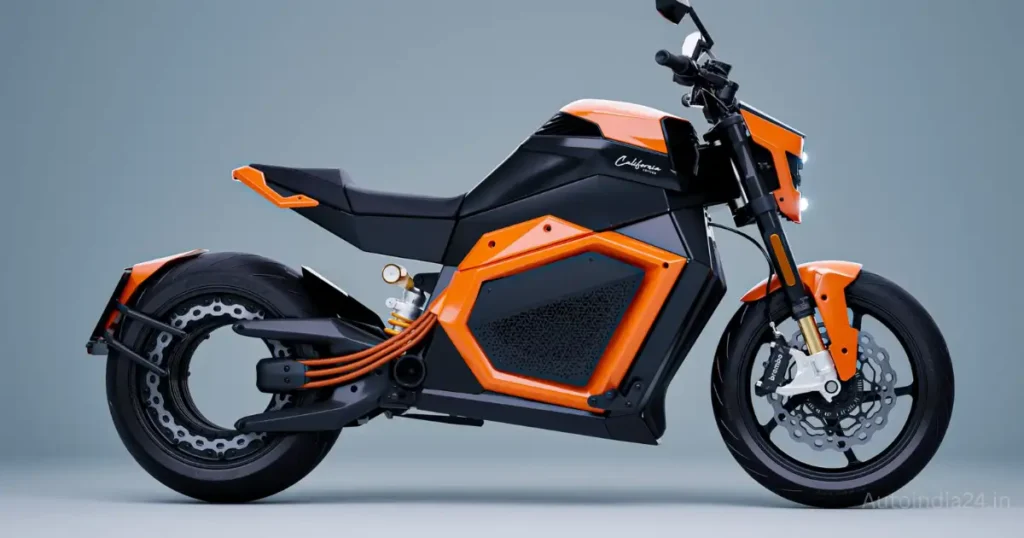
The Verge TS Pro will likely remain a niche product, but its impact could be wide-reaching. If solid-state batteries become easier and cheaper to manufacture, they could eventually filter down to mass-market electric scooters and motorcycles.
For India, where two-wheelers dominate personal transport, safer batteries, faster charging and longer range could accelerate the shift away from petrol. While that future may still be several years away, the TS Pro offers a clear glimpse of what’s coming.
Conclusion- Verge TS Pro Explained
The Verge TS Pro is not just another electric motorcycle—it is a technological milestone. By bringing solid-state battery technology into production and pairing it with ultra-fast charging and superbike-level performance, it challenges long-held assumptions about the limits of electric two-wheelers.
While its immediate relevance to Indian buyers is limited, its long-term implications for safety, charging convenience and electric mobility are significant.
Disclaimer: The information in this article is based on details shared by the manufacturer and publicly available sources at the time of writing. Specifications, performance figures, charging times and range claims are subject to real-world conditions and may vary.
Also Read: Triumph 400cc Price Hike in India: Speed 400, Scrambler & Thruxton Get Costlier

Raj Prajapati is a senior automobile journalist at AutoIndia24, reporting on car, bike, EV, and auto industry developments in India.