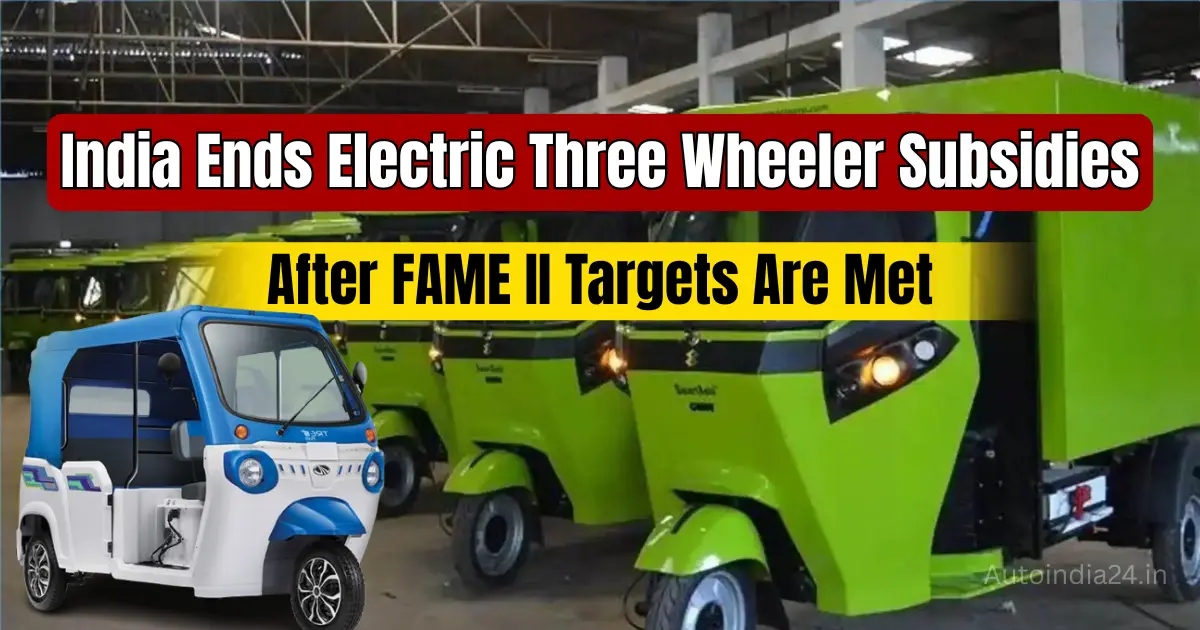
The Government of India has discontinued central purchase Electric Three Wheeler Subsidies under the FAME II scheme, following a review that concluded national adoption targets for the segment have been met. The decision marks a turning point for one of the fastest-electrifying vehicle categories in the country and has direct implications for operators, manufacturers, and buyers involved in last-mile mobility.
This move was reported by Times of India, citing officials familiar with the government’s assessment.
Also Read: Two Wheeler Sales 2025: India Crosses 20 Million Registrations, Up 7% YoY
What Has Changed?
Central demand incentives for battery-electric three-wheelers—both passenger carriers and goods vehicles—are no longer available for new purchases. These incentives were earlier provided under the FAME II programme and were linked to battery capacity and vehicle type. With their withdrawal, buyers will now pay the full vehicle price without central financial support at the point of sale.
The decision applies nationwide and affects electric rickshaws, cargo three-wheelers, and other commercial electric three-wheelers used for passenger transport and last-mile deliveries.
Why Were the Subsidies Withdrawn?
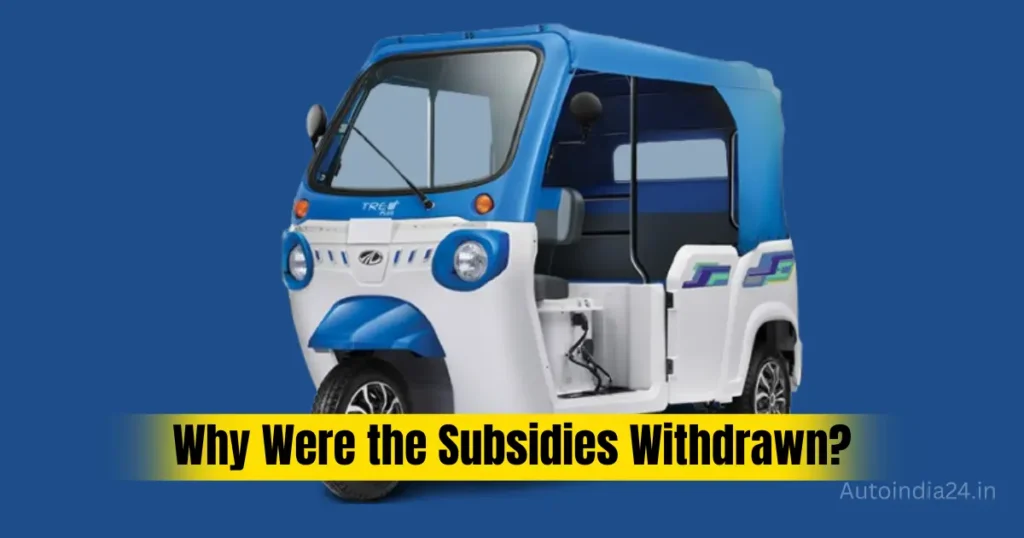
According to officials involved in the review, electric three-wheelers have reached sufficient market penetration across India. Under the government’s assessment, the objectives outlined under the PM-E Drive programme—focused on accelerating electric mobility—have largely been achieved for this segment.
Several factors supported this conclusion:
- Widespread adoption of electric three-wheelers in urban and semi-urban areas
- Improved availability of public and private charging infrastructure
- Higher localisation of components, including motors, controllers, and battery packs
- Cost reductions achieved through scale and maturing supply chains
Electric three-wheelers were among the earliest vehicle segments to electrify successfully in India, largely because of predictable usage patterns, lower battery size requirements, and strong commercial viability compared to internal combustion alternatives.
How Subsidies Worked Under FAME II
Under FAME II, Electric Three Wheeler Subsidies were eligible for purchase-linked incentives aimed at lowering upfront acquisition costs. The subsidy amount was calculated based on battery size and vehicle classification and was passed on to buyers via manufacturers and dealers.
This support played a major role in encouraging adoption among small entrepreneurs, fleet operators, and owner-drivers, particularly in shared mobility and goods transport applications where upfront cost sensitivity is high.
Impact on Buyers and Operators
With Electric Three Wheeler Subsidies now discontinued, the immediate impact will be felt on purchase prices. Electric three-wheelers will become more expensive upfront, which could affect buying decisions, especially for first-time owner-drivers and small fleet operators.
For existing operators, day-to-day running economics remain largely unchanged, as electric three-wheelers continue to offer lower operating and maintenance costs compared to petrol or CNG alternatives. However, new buyers may need to reassess financing options, loan tenures, or total cost of ownership calculations.
Fleet operators and aggregators may respond by revising lease models, usage contracts, or fare structures, particularly in markets where electric three-wheelers compete directly with internal combustion vehicles on price.
What This Means for Manufacturers
Manufacturers that built pricing strategies around central subsidies will now need to recalibrate. This could involve adjusting ex-showroom prices, offering alternative financing schemes, or increasing focus on operational savings rather than upfront affordability.
Over the medium term, the policy shift may push manufacturers to improve efficiency further, invest in cost reduction, and strengthen after-sales support to maintain demand without direct government incentives.
Role of State-Level Incentives
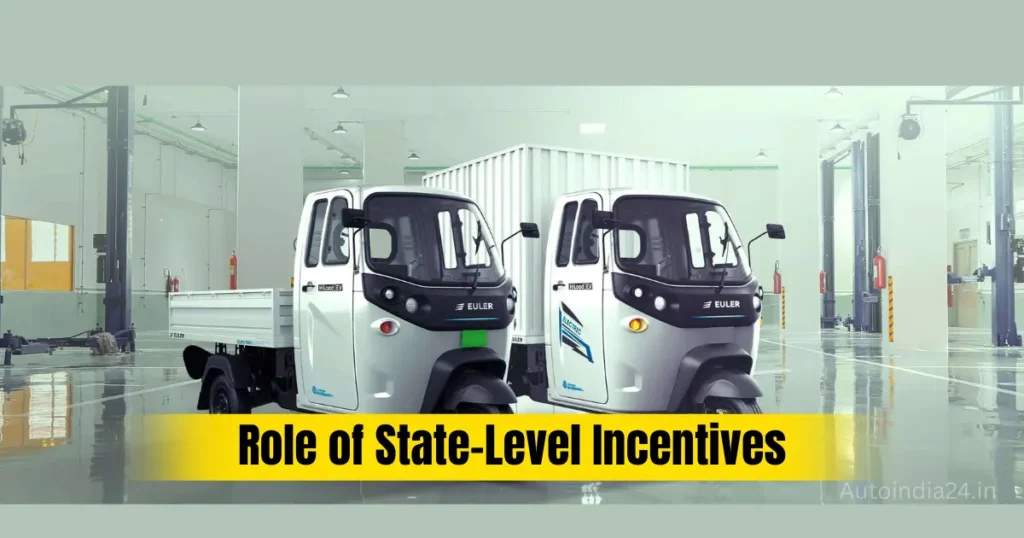
It is important to note that while central subsidies have ended, state-level EV incentives may still apply in some regions. Several states operate independent electric vehicle policies offering purchase incentives, road tax exemptions, or other benefits. These schemes are administered separately and may continue to support electric three-wheeler adoption at a local level.
The Bigger Picture
The withdrawal of subsidies reflects the government’s view that electric three-wheelers no longer require direct demand support to sustain adoption. It also signals a shift toward market-driven growth, where technology maturity and cost competitiveness play a larger role than incentives.
Conclusion
India’s decision to end central Electric Three Wheeler Subsidies marks a significant milestone in the country’s EV journey. While the move may raise upfront costs for new buyers, it also highlights how far the segment has progressed in a relatively short time.
For operators and manufacturers, the focus now shifts from incentive-led adoption to long-term viability, efficiency, and service quality in a maturing electric mobility market.
Disclaimer: This article is based on government reviews and media reports available at the time of publication. Policy details and state-level incentives may vary and are subject to change.
Also Read: Ola Electric Market Share Falls Sharply in 2025 as TVS, Bajaj Gain Ground

Raj Prajapati is a senior automobile journalist at AutoIndia24, reporting on car, bike, EV, and auto industry developments in India.