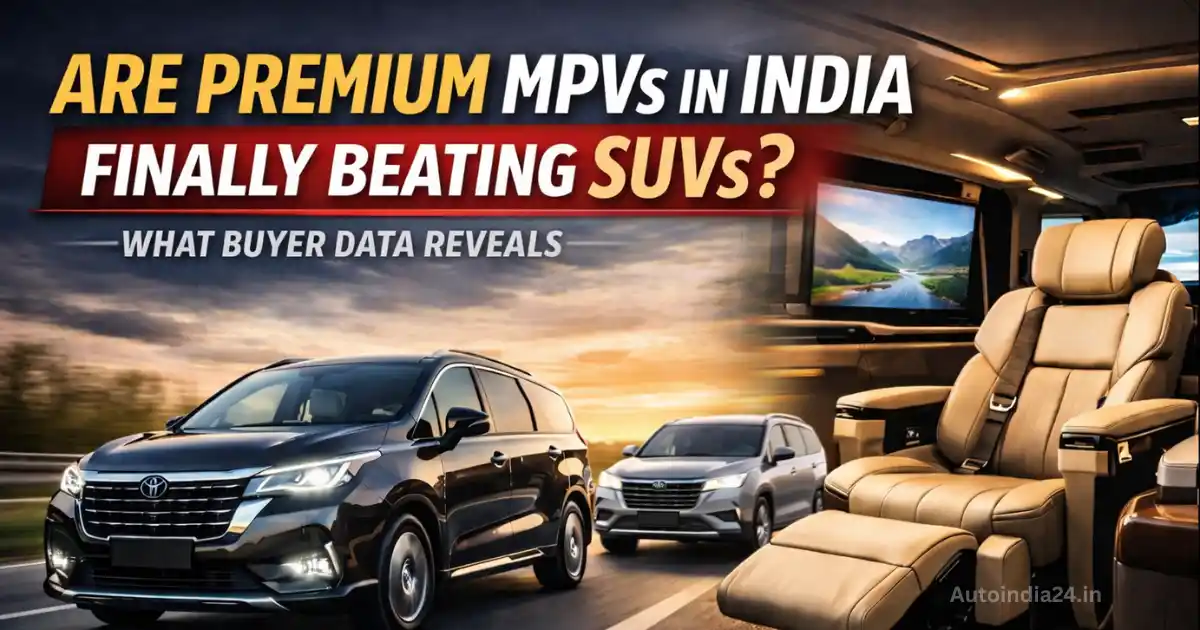
Premium MPVs in India: For years, the Indian car market treated MPVs as purely functional vehicles—practical, yes, but rarely aspirational. That perception is now changing rapidly. From mass-market family buyers to luxury car customers, more Indians are warming up to the idea of spending serious money on premium MPVs. Recent sales data and product strategies from manufacturers suggest this shift is not temporary, but structural.
Also Read: Sedan vs SUV Sales in India 2025: Sedans Hold Ground Despite SUV Boom
From affordability to aspiration
One of the clearest signals of this change is the evolving mindset of Indian car buyers. A large proportion of customers today are no longer shopping only within strict budget limits. Instead, they are willing to stretch for vehicles that offer better comfort, technology, and long-term ownership satisfaction.
A 2024 buyer survey showed that a significant majority of Indian car shoppers were actively considering premium models. This reflects a broader trend: cars are increasingly seen as lifestyle products rather than just transport tools. In that context, MPVs—once dismissed as “people movers”—are being re-evaluated for what they do best.
Why MPVs make sense in today’s India
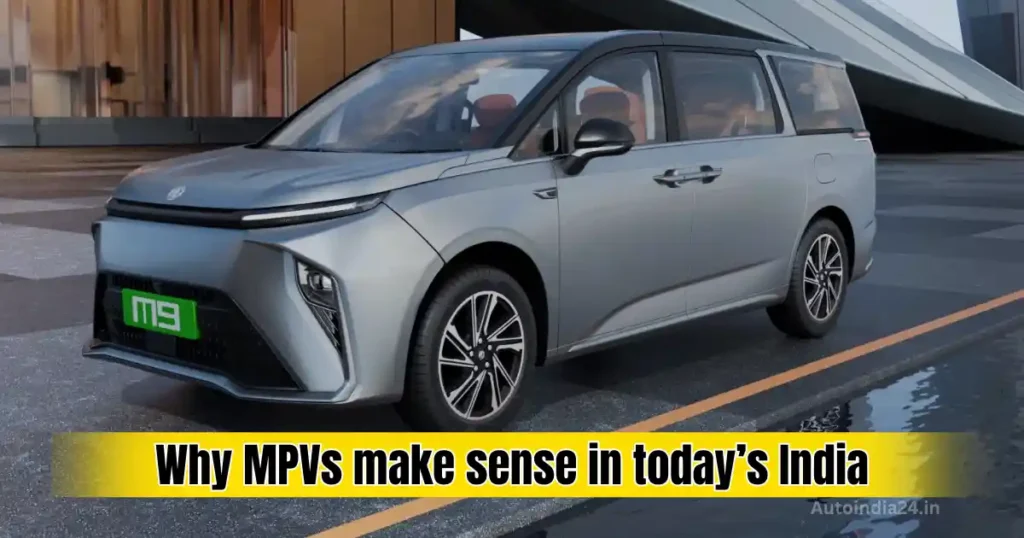
Urban India has become more congested, journeys are longer, and families often travel together. For many buyers, MPVs now represent an “oasis of comfort” in chaotic traffic conditions. High roofs, wide cabins, and flexible seating layouts make them far more usable than similarly priced SUVs.
Genuine three-row seating is another key factor. While many SUVs advertise seven seats, the third row is often cramped and best suited for short trips. MPVs, by contrast, are designed around passenger space, making them attractive to joint families, frequent highway travellers, and chauffeur-driven owners.
Comfort is now the core selling point
Premium MPVs are no longer about just adding extra seats. Manufacturers are focusing heavily on rear-seat comfort, acknowledging that many owners will spend most of their time in the second row.
Features such as ottoman seats with extended leg support, powered sliding doors, large infotainment screens, multi-zone climate control, and quiet cabin insulation are becoming central to the pitch. These lounge-like experiences appeal strongly to senior family members and buyers upgrading from executive sedans.
Sales numbers back the trend
The growing acceptance of Premium MPVs in India is clearly visible in sales data. In the first half of FY2026, MPVs accounted for around 11 percent of all utility vehicle sales in India—a notable share in an SUV-dominated market.
What’s more telling is performance at the top end. The ultra-luxury Toyota Vellfire, priced well above ₹1 crore, recorded a 14 percent sales increase during this period. This shows that price is no longer a major barrier for buyers seeking comfort and exclusivity.
At the mass-premium level, models like the Kia Carens continue to find strong demand among young families, while the long-running Toyota Innova remains a benchmark for reliability and resale value.
Premium positioning is expanding
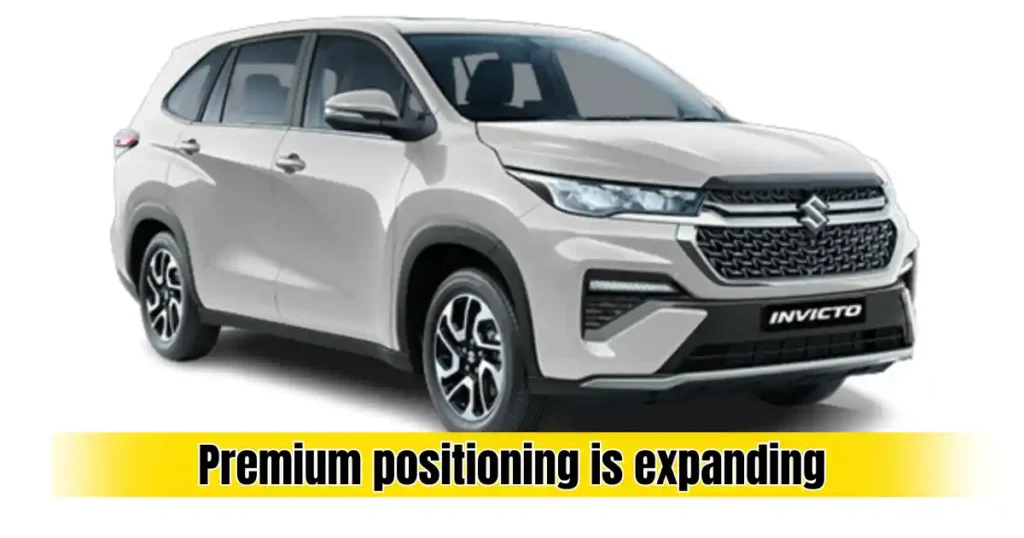
The space between mainstream and Premium MPVs in India is also filling up. Vehicles such as the Maruti Suzuki Invicto, essentially a premium take on the Innova Hycross, have shown that Indian buyers are comfortable paying close to ₹30 lakh for a well-equipped MPV with a strong brand backing.
This middle ground is crucial. It allows buyers to access premium features without stepping into full luxury pricing, further broadening the appeal of MPVs.
Safety has become a decisive factor
Another major driver of this trend is safety awareness. Indian buyers today pay close attention to airbags, electronic stability control, ADAS features, and crash protection—especially when buying family vehicles.
Premium MPVs typically score well here, offering multiple airbags, advanced driver assistance systems, and robust body structures. For many buyers, this focus on safety now outweighs design flair or brand image, helping MPVs gain ground over style-led SUVs.
Carmakers are betting big on MPVs
Perhaps the strongest confirmation that the market is ready comes from manufacturers themselves. Global and Indian brands are expanding their MPV portfolios with confidence.
Upcoming and recently introduced models such as the Hyundai Staria, MG Mifa 9 EV, and the updated Kia Carnival signal that automakers see long-term potential in this segment. The inclusion of hybrid and electric powertrains also aligns MPVs with future mobility trends.
A shift in social perception

Traditionally, sedans were seen as the “proper” choice for upward mobility in India, while MPVs were viewed as utilitarian. That stigma is fading. Buyers today are more comfortable choosing vehicles that suit their real needs—even if it means proudly owning what is, technically, a van.
This cultural shift is critical. It allows MPVs to be judged on merit rather than image, opening the door for premium positioning.
Conclusion: the market is not just ready, it’s evolving
Indian buyers are no longer asking whether MPVs are acceptable—they are deciding which one best fits their lifestyle. Rising incomes, changing family dynamics, improved safety awareness, and better product offerings have collectively pushed Premium MPVs in India into the mainstream conversation.
With strong sales, growing manufacturer interest, and expanding price brackets, premium MPVs in India are not a niche experiment anymore. They are fast becoming a logical, and increasingly aspirational, choice for buyers who value comfort, space, and long-term usability over conventional body-style preferences.
Disclaimer: This article is based on industry data and market analysis available at the time of publication. Sales figures, prices, and specifications may vary by region and updates from manufacturers. Readers should verify details with official sources before making purchase decisions.
Also Read: Maruti Suzuki Production 2025 Hits Record High at 22.55 Lakh Vehicles

Raj Prajapati is a senior automobile journalist at AutoIndia24, reporting on car, bike, EV, and auto industry developments in India.